When you bring up the topic of AI at a family reunion or at workplace lunch, the discussion inevitably steers to “what do you think AI’s impact will be on the job market?” Mainstream media and AI critics have often held pessimistic views on the topic, and rightfully so, with Andrew Yang warning of millions of impending white-collar layoffs because of AI. Yet, akin to the invention of the wheel or the advent of massive steam-powered factories during the industrial revolution, what begins as short-term displacement may transform into long-term recomposition.
Despite media buzzing about layoffs, there’s another impactful short-term effect that’s underdiscussed: work intensification. A new embedded workplace study (8 months, ~200 workers) found that AI adoption didn’t translate into “less work.” Instead, employer expectations rose, and AI expanded responsibilities outside formal job descriptions, increased multitasking, and allowed employees to focus more on more essential, higher-level tasks. And while work intensification may seem to coincide with layoffs in the short-term (if fewer people can do more work with AI, why do we need so many employees?), it’s not necessarily the case long-term in many white-collar jobs where demand isn’t capped and tasks aren’t standardizable. AI isn’t a limit or simply an efficient tool for companies, it’s a revolutionary technology that opens the door to endless expansionary opportunity. Plus, this trend of increased ambition provides an outlook into the future of jobs with AI.
As AI expands, less companies will be focused on cutting costs, and more will be focused on seeing how much they can expand with the same (or a little more) resources. Pivoting to individual interactions, AI is easily redefining what “downtime” means in jobs. If AI can generate a draft in a few minutes, why not queue up one more prompt before going on break? Why not have a chatbot running in the background while sitting in a meeting? In an AI-saturated workplace, breaks transform into opportunities to squeeze in more output. As a result, employees are shifting to an “always-on” mindset. Not necessarily because of increased demand or expectations, but because now more than ever, it’s easier to put in that extra bit of work. In fact, choosing not to leverage AI whenever possible could begin to feel like negligence, like wasting a perfect opportunity. AI doesn’t just cause layoffs, it doesn’t just increase productivity, it expands the bounds that work occupies.When you bring up the topic of AI at a family reunion or at workplace lunch, the discussion inevitably steers to “what do you think AI’s impact will be on the job market?” Mainstream media and AI critics have often held pessimistic views on the topic, and rightfully so, with Andrew Yang warning of millions of impending white-collar layoffs because of AI. Yet, akin to the invention of the wheel or the advent of massive steam-powered factories during the industrial revolution, what begins as short-term displacement may transform into long-term recomposition.
Despite media buzzing about layoffs, there’s another impactful short-term effect that’s underdiscussed: work intensification. A new embedded workplace study (8 months, ~200 workers) found that AI adoption didn’t translate into “less work.” Instead, employer expectations rose, and AI expanded responsibilities outside formal job descriptions, increased multitasking, and allowed employees to focus more on more essential, higher-level tasks. And while work intensification may seem to coincide with layoffs in the short-term (if fewer people can do more work with AI, why do we need so many employees?), it’s not necessarily the case long-term in many white-collar jobs where demand isn’t capped and tasks aren’t standardizable. AI isn’t a limit or simply an efficient tool for companies, it’s a revolutionary technology that opens the door to endless expansionary opportunity. Plus, this trend of increased ambition provides an outlook into the future of jobs with AI.
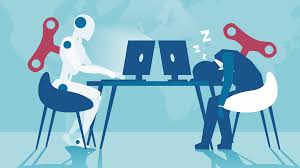
As AI expands, less companies will be focused on cutting costs, and more will be focused on seeing how much they can expand with the same (or a little more) resources. Pivoting to individual interactions, AI is easily redefining what “downtime” means in jobs. If AI can generate a draft in a few minutes, why not queue up one more prompt before going on break? Why not have a chatbot running in the background while sitting in a meeting? In an AI-saturated workplace, breaks transform into opportunities to squeeze in more output. As a result, employees are shifting to an “always-on” mindset. Not necessarily because of increased demand or expectations, but because now more than ever, it’s easier to put in that extra bit of work. In fact, choosing not to leverage AI whenever possible could begin to feel like negligence, like wasting a perfect opportunity. AI doesn’t just cause layoffs, it doesn’t just increase productivity, it expands the bounds that work occupies.

 AI Policies for a Safer, Smarter World.