
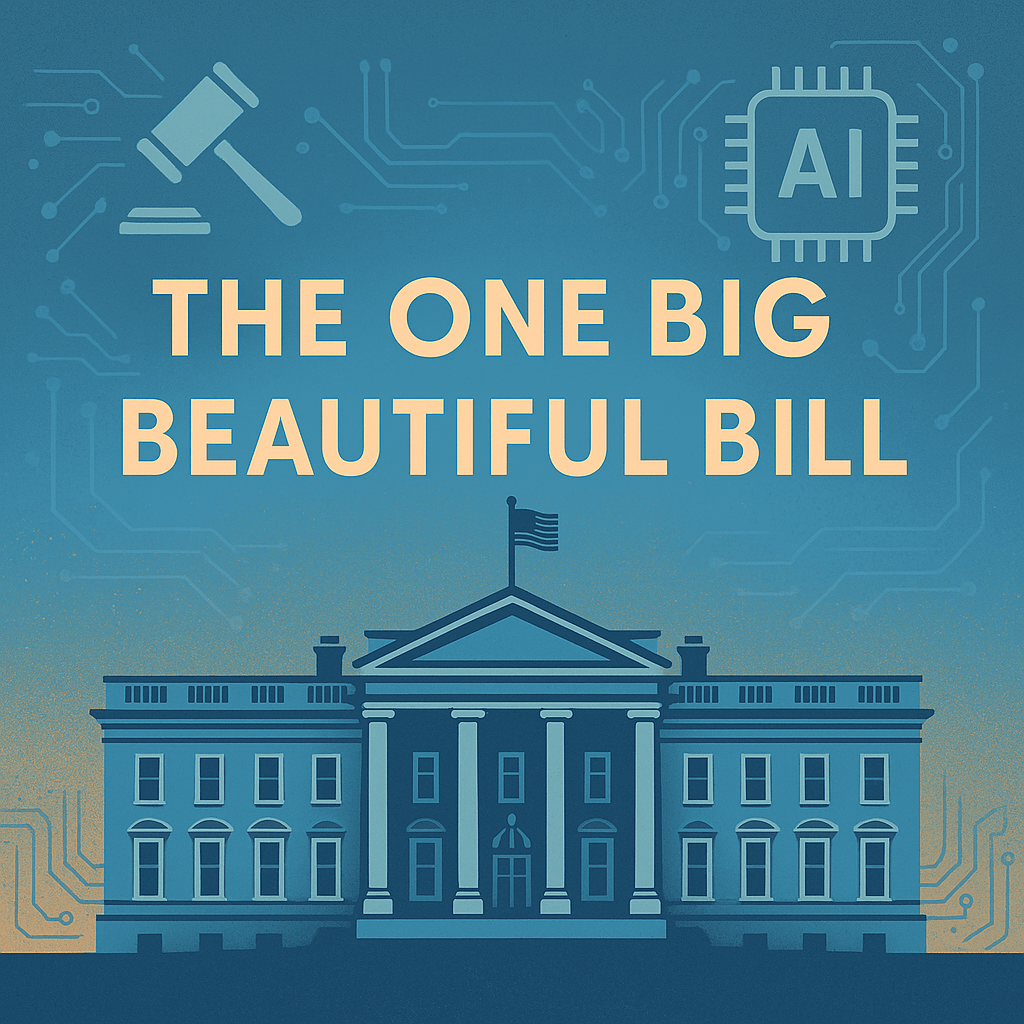
The One Big Beautiful Bill represents the current administration’s platform legislative proposal, aiming to decrease taxes, cut federal programs deemed unnecessary, and raise the debt limit, among other policies presented in the bill. However, section 43201 of the bill regarding AI could have grand implications on the U.S for the next decade and has sparked controversy among politicians and leaders in AI ethics.
1. A Federal Ban on State AI Laws
At its core, the BBB places a 10-year freeze on meaningful state and local regulation of AI systems that enter interstate commerce. That means cities and states, many of which have been leading the charge on ethical AI, will be barred from enacting or enforcing substantive laws on AI, including:
- Design or safety requirements
- Performance standards
- Data handling or transparency
- Civil liability for harms
- Documentation or auditing rules
- Taxation and even modest fees (with few exceptions)
While the reasoning behind the bill’s proposed AI policies is that the deregulation would spur innovation and growth, the handcuffing of democratic governance at the most responsive levels of government could have negative consequences on AI in the long term. Safety and innovation are not opposites, and regulating AI systems could ensure the industry has a foundation of responsibility and safety moving forward. While states like California, Illinois, and New York have been experimenting with biometric regulations, algorithmic hiring audits, and facial recognition bans, the BBB would grind much of that innovation to a halt.
2. A Boost for Federal Tech Modernization
To its credit, the bill does provide funding to the Department of Commerce to modernize federal IT systems using commercial AI solutions. This includes:
- Replacing outdated systems
- Automating government services for efficiency
- Integrating AI for cybersecurity and threat detection
However, this proposal the bill prioritizes commercial AI, which likely opens the door for major private vendors to shape public infrastructure. It emphasizes “efficiency and service delivery” without requiring ethical safeguards, public oversight, or procurement transparency. Similar to the military-industrial complex, this policy may streamline bureaucracy, but could also create tech monopolies in government with little room for public accountability or input.
3. The Ethical and Political Stakes
Framed as a modernization bill, the BBB reshapes the future of AI governance by reinforcing federal authority over regulation and limiting the role of state and local governments. While this may promote consistency and streamline advancement, it reduces opportunities for local experimentation and responsiveness.
Rather than fostering a responsible innovation ecosystem, it encourages rapid deployment of AI technologies without introducing ethical safeguards. For industry stakeholders, the BBB offers regulatory clarity and the removal of potential compliance burdens across jurisdictions. However, for those focused on public interest outcomes and the long-term social impacts of AI, the bill may represent a missed opportunity to introduce thoughtful guardrails and public protections. Furthermore, pausing state regulatory innovation in favor of commercial adoption could present issues in the future. As the U.S. seeks to shape the global direction of AI policy, ensuring that innovation is accompanied by transparency, fairness, and public trust will remain a critical challenge.


 AI Policies for a Safer, Smarter World.