
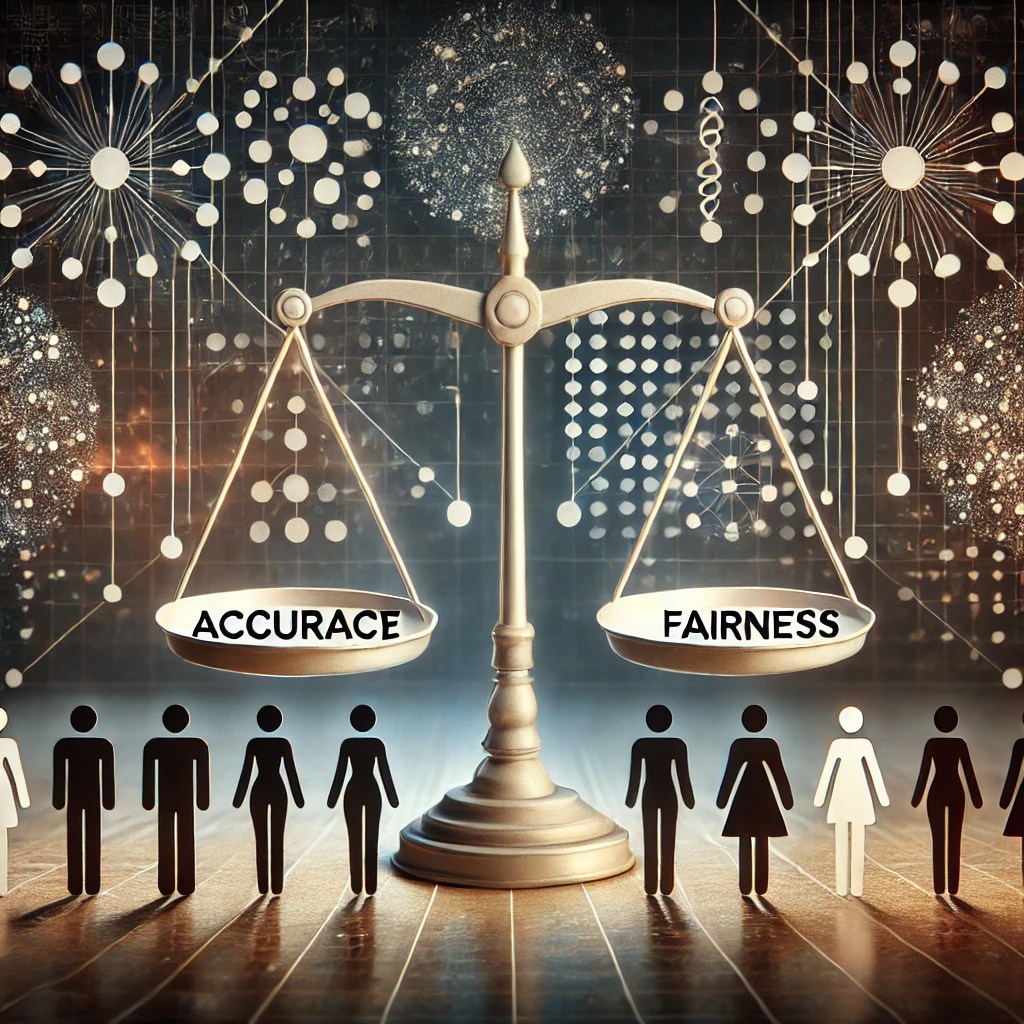
One of the most pressing concerns in AI applications is bias in AI models, which can lead to discriminatory outcomes and negatively impact underrepresented groups. Ensuring fairness in AI is not straightforward, however: technical limitations and complexity often make it difficult to eliminate bias entirely. In this post, I will dive into how bias emerges in AI, the technical challenges of mitigating it, and the methods developers are using to increase the fairness of AI models.
Why Does Bias in AI Matter?
AI models are only as fair as the data employed to train them. If a model’s training data is biased, it can reflect and exaggerate existing inequalities. This is a major concern in high-stakes applications like hiring, loan approvals, or law enforcement as it not only raises ethical issues but can also harm people’s trust in AI.
How Does Bias Enter AI Models?
- Bias in Data Collection: The data used to train models can be inherently biased, often reflecting historical inequalities. For example, if a model is trained on hiring data where certain groups were underrepresented, it will likely reflect that bias in future hiring recommendations.
- Sampling Bias: If the training data doesn’t represent all relevant groups equally, the model may perform well for the majority but poorly for minorities. This is common in datasets collected from limited geographical or socioeconomic areas.
- Label Bias: In supervised learning AI models learn based on labeled data. This labeling exercise is often done by humans. Human biases can seep into these labels that can later influence the model.
- Algorithmic Bias: Even with balanced data, the model’s structure or optimization process can introduce bias. Models optimized solely for accuracy might overlook smaller populations and lead to fairness issues.
The Technical Challenges of Reducing Bias
There are technical and practical challenges in reducing bias in AI models. These are some of the biggest obstacles:
- Data Quality and Availability: AI models re quire vast amounts of data to perform well. However, it is not easy to find balanced, representative datasets causing some demographic groups to be underrepresented. Gathering more data to balance representation can be costly and time-consuming and for fields like healthcare and law, this can be even infeasible due to privacy and other regulations.
- Defining Fairness: Fairness itself is a subjective concept. Demographic parity, equal opportunity, and equalized odds are some of the existing fairness metrics. But it is challenging to optimize for all fairness metrics at once. Therefore, Agreeing on the metrics that best align with ethical goals and specific context is a big challenge.
- Trade-offs with Model Performance: Many bias mitigation techniques require the model to adjust its predictions to meet fairness constraints. This can reduce its overall accuracy and performance is tricky. Too much fairness correction can result in a model that’s less effective/realistic overall.
Current Methods to Mitigate Bias
- Pre-processing Techniques: These methods modify the dataset to be more balanced and representative before using it for training. Reweighting Involves assigning weights to different data points to balance the dataset across demographic groups. Data augmentation can also be used to create more data for underrepresented groups. These approaches can sometimes lead to over-correction, which may introduce new biases.
- In-processing Techniques: These methods are applied during the model training phase to adjust for bias as the model learns. Adversarial debiasing is one technique where the model tries to learn a primary objective like predicting an outcome. It tries to simultaneously ensure that its predictions are not correlated with sensitive attributes such as race or gender. This process can improve fairness, but balancing objectives can be computationally intensive and requires careful tuning to avoid performance loss.
- Post-processing Techniques: After the model is trained, post-processing adjusts its predictions to improve fairness without retraining. Calibration can adjust output probabilities to ensure fair treatment across demographic groups. This type of Post-processing can only make small adjustments to predictions and may not be as effective for highly biased models.
What’s Next for Fairness in AI?
As AI becomes more deeply integrated into society, the need for fair, unbiased AI systems is increasingly urgent. Current bias mitigation techniques are promising, but they are not foolproof. They require a deep understanding of the data and model. Regular monitoring is required to ensure that bias doesn’t creep back over time as data or real-world conditions change.
Understanding bias sources and the methods used to reduce it, can help create a foundation for ethical AI development. Mitigating bias in AI requires a multi-faceted approach. It should address technical aspects, as well as ethical, legal, and social dimensions of bias. We should prioritize fairness from the beginning and engage diverse communities. Continuous bias monitoring can help build AI systems that serve everyone equally. Policymakers, AI researchers and companies across industries are coming up with guidelines, frameworks, and regulations to ensure AI fairness. We can expect to see more advanced and robust solutions to these technical challenges in the coming months.




 AI Policies for a Safer, Smarter World.